From the Framework
What Is Contextual Congruence?
Updated August 2026 · from The Signal Gap by Henna Pryor
Contextual Congruence is a signal that holds its meaning after you’ve walked out of the room. The term comes from Henna Pryor’s The Signal Gap (Ideapress, November 2026), where it closes the signal gap between the room you tuned your message for and the rooms it actually lands in.
Why don’t messages stay where you put them?
Because screenshots, forwards, and searchable archives carry your words to rooms you’ll never stand in - stripped of your tone, your history, and the context that made them make sense. When the stakes are high, you have to craft messages for the rooms they’ll travel to without your permission.
What is a home room?
Every word has a home room where its meaning is understood by everyone in it. Outside that room, the same word can land very wrong - a term that reads as routine to your team can read as callous to the company. And absolutes like “never” and “always” become searchable promises, waiting to be checked against your record.
How do you send messages that travel?
Pack the context - it won’t travel with the message unless you do, and a skeptic rarely fills an empty blank with a generous story. Run high-stakes messages through a skepticism filter: read them as your worst critic would, as a screenshot, stripped of good faith. And slow down - most contextual signal gaps are speed gaps, because the fastest words are calibrated for the room you’re in, not the rooms your message may travel to.
Frequently asked questions
Who coined the term Contextual Congruence?
Henna Pryor, in The Signal Gap: How to Boost Believability and Influence in the Age of Doubt (Ideapress, November 10, 2026) - the third of the book’s four congruences.
What do you do when a message lands badly in a room you didn’t intend?
Make the repair travel as far as the misread did. A private apology can’t fix a public contextual gap - if the screenshot reached three hundred people, the correction has to reach them too.
Does writing for every possible room make communication vague?
No - vagueness is its own signal gap. Contextual Congruence means choosing words that can survive the trip with their meaning intact, then packing the context they need. Specific and portable beats vague and safe.
Keep reading
About Henna Pryor
Henna Pryor is a Certified Speaking Professional (CSP), 2x TEDx speaker, Inc. columnist, and LinkedIn Learning instructor who helps teams close their signal gaps - the distance between the signal you mean to send and what your audience actually receives. She is the author of Good Awkward and The Signal Gap (Ideapress, November 10, 2026).
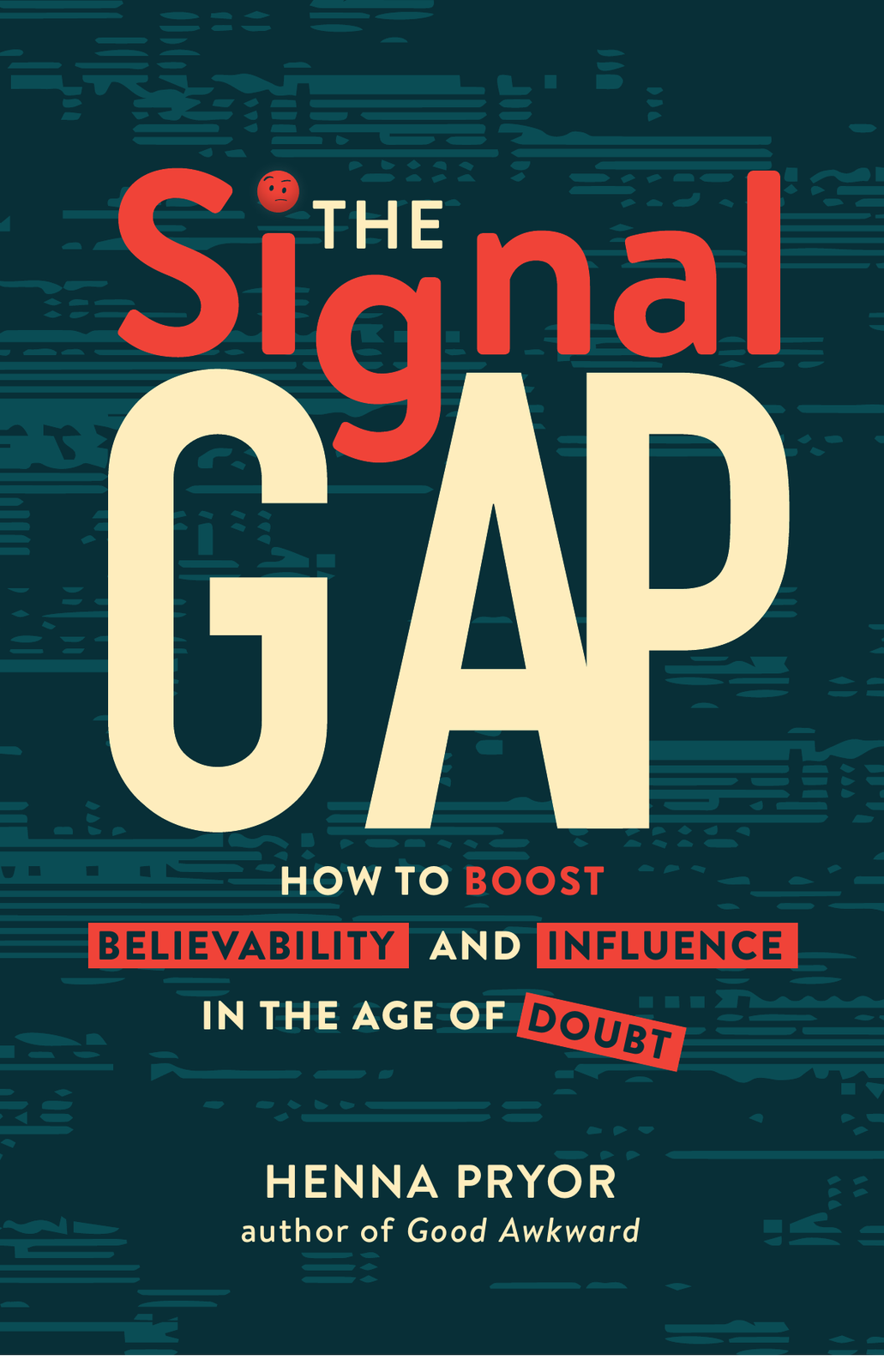
The Signal Gap: How to Boost Believability and Influence in the Age of Doubt
Publishing November 10, 2026
For Meeting Planners & Bureaus
Henna keynotes sales kickoffs, leadership meetings, and HR & L&D conferences on trust, believability, influence, and workplace performance.
From The Signal Gap by Henna Pryor