The Verification Problem
Why Is Trust Harder to Earn in the age of AI?
Updated August 2026 · by Henna Pryor, author of The Signal Gap
Trust is harder to earn in the age of AI because the default flipped: people now verify before they trust. Workplace performance expert Henna Pryor calls this the Verification Era. The rules didn't change - the price we pay for breaking them did. When polish got cheap, polish got suspicious, and even honest, competent people started setting off the alarm.
The skepticism isn't limited to work. In July 2026, the Bentley University-Gallup Business in Society survey found that 39% of Americans believe AI does more harm than good, up from 31% a year earlier. Trust in businesses to use AI responsibly slipped to 27%. Among adults aged 18 to 29, the share reporting no trust at all in how businesses use AI climbed from 29% to 41% in a single year - which means the people walking into your workforce are the least willing to take your word for it.
What changed - did people become more cynical?
Not cynical - recalibrated. In her book The Signal Gap (Ideapress, November 2026), Pryor traces eight shifts that changed the room: AI made flawless output free, archives made every past statement searchable, screenshots let messages travel stripped of context, and the hallway moments that used to carry goodwill disappeared. Once catching a contradiction takes four seconds, people stop extending belief until the record backs it up. That's the somersault that turned trust-then-verify into verify-then-trust.
Why doesn't competence fix it?
Because credibility and believability are two different things. Credibility - the title, the track record, the stuff on paper - still gets you in the room. But once you're in it, you have to be believable, or none of it lands. Believability depends on whether your signals tell the same story at the same time, solid enough not to wobble when someone gives one of them a tug. And in the Verification Era, someone will.
What actually earns belief now?
Congruence: every signal - your words, reasoning, behavior, and context - pointing in the same direction as the truth underneath. The Signal Gap turns that into five practices: always disarm before you deliver, say the awkward part out loud, let them watch you think, choose words that travel without you, and audit the promises you didn't even know you were making. Costly, human, checkable signals - the kind no machine can fake.
Frequently asked questions
Is AI itself the reason people trust less at work?
AI is an accelerant, not the whole story. It made polished output free, which broke polish as a proxy for effort and honesty - one of eight shifts Henna Pryor identifies in The Signal Gap that moved the culture from trust-then-verify to verify-then-trust.
What is the Verification Era?
Henna Pryor's term for the culture that verifies before it trusts. When checking someone's record became everyone's automatic first move, belief stopped being extended on credentials alone - every room started feeling like TSA, where your message gets through only after your signals make it past security.
Who is Henna Pryor?
A Certified Speaking Professional, 2x TEDx speaker, and Inc. columnist who speaks on believability, influence, and workplace performance. Her book The Signal Gap: How to Boost Believability and Influence in the Age of Doubt publishes November 10, 2026.
Keep reading
About Henna Pryor
Henna Pryor is a Certified Speaking Professional (CSP), 2x TEDx speaker, Inc. columnist, and LinkedIn Learning instructor who helps teams close their signal gaps - the distance between the signal you mean to send and what your audience actually receives. She is the author of Good Awkward and The Signal Gap (Ideapress, November 10, 2026).
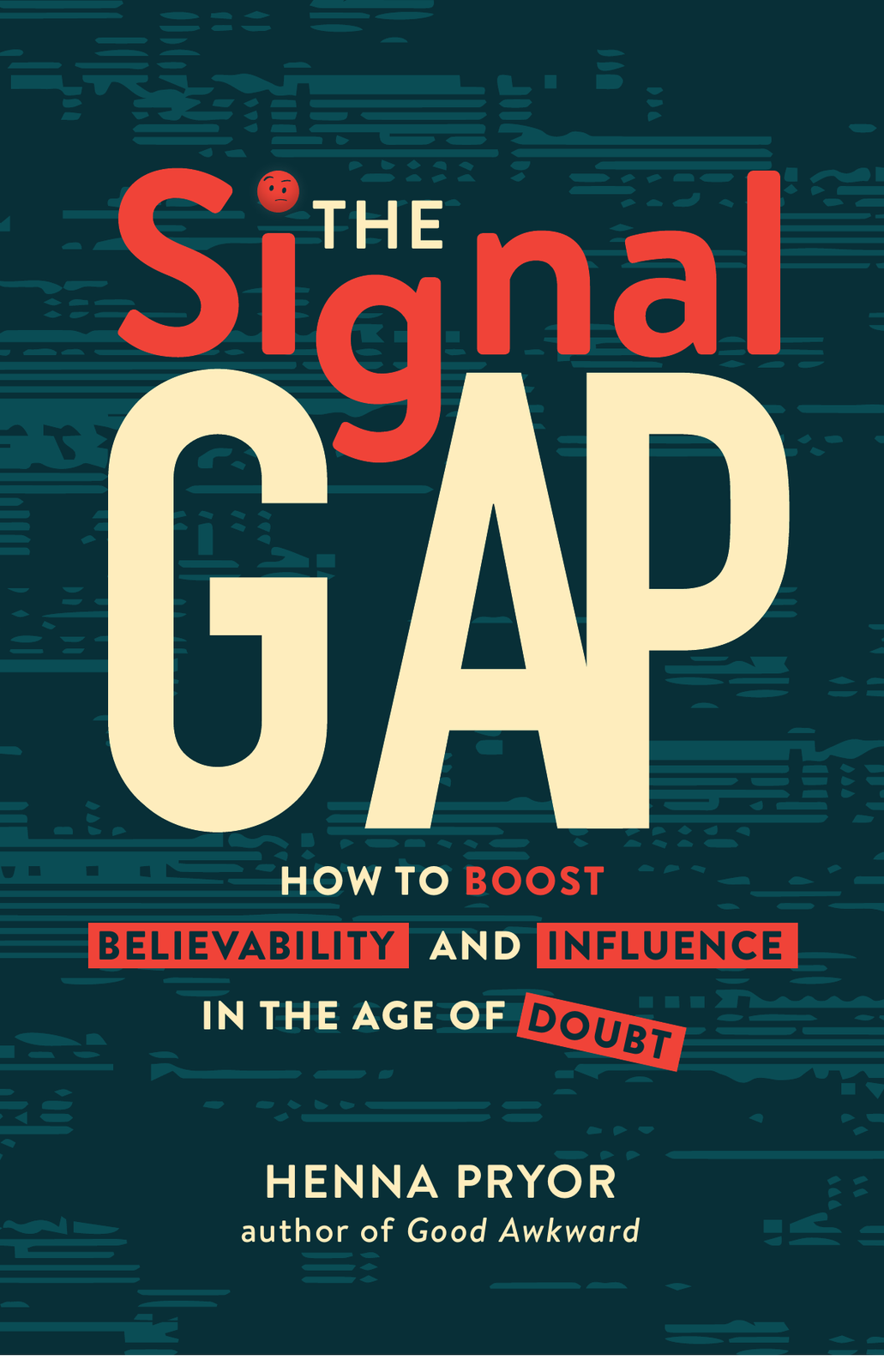
The Signal Gap: How to Boost Believability and Influence in the Age of Doubt
Publishing November 10, 2026
For Meeting Planners & Bureaus
Henna keynotes sales kickoffs, leadership meetings, and HR & L&D conferences on trust, believability, influence, and workplace performance.
From The Signal Gap by Henna Pryor