A Distinction
Credibility vs. Believability: What’s the Difference?
Updated August 2026 · from The Signal Gap by Henna Pryor
Credibility gets you in the room; believability decides whether anything lands once you’re in it. Credibility is the stuff on paper - the title, the track record, the earned gray hairs. The distinction comes from Henna Pryor’s book The Signal Gap (Ideapress, November 2026): in a verify-then-trust world, you can be credible, honest, and well-meaning, and still not be believed.
Why isn’t credibility enough anymore?
Because the default flipped from trust-then-verify to verify-then-trust. Credentials used to buy the benefit of the doubt; now they buy you an audience that checks. Believability depends on whether your signals tell the same story at the same time - solid enough not to wobble when someone gives one of them a tug. And in the Verification Era, someone will.
What makes someone believable?
Congruence: every signal - your words, reasoning, behavior, and context - pointing in the same direction as the truth underneath. A signal gap opens when the signal you mean to send isn’t the one your audience receives, and even a hairline crack in one signal can widen into a canyon. Believability is the skill of keeping those signals aligned under inspection.
Can you be believable without a big title?
Yes - believability isn’t a personality trait, and it isn’t seniority. The moves that build it (naming the doubt in the room, showing your reasoning, keeping your public claims matched to your everyday behavior) are available at any level. In fact they matter more without a title, because you don’t have credibility doing the opening act for you.
Frequently asked questions
Can you be credible but not believable?
Yes - it's one of the most common signal gaps at work. Your resume, title, and track record can be impeccable while the signals around your message (vague words, hidden reasoning, a channel that doesn't match the stakes) tell a different story. Credibility gets checked once; believability gets checked every time you communicate.
Which matters more in the age of AI?
Believability. AI made polished, credible-sounding output free, which means polish and credentials no longer separate you. What separates you now is congruence - signals that hold up when the room checks them - because that's the one thing a tool can't generate on your behalf.
Where does this distinction come from?
The Signal Gap: How to Boost Believability and Influence in the Age of Doubt by Henna Pryor (Ideapress, November 10, 2026). Pryor is a Certified Speaking Professional, 2x TEDx speaker, and Inc. columnist who speaks on believability, influence, and workplace performance.
Keep reading
About Henna Pryor
Henna Pryor is a Certified Speaking Professional (CSP), 2x TEDx speaker, Inc. columnist, and LinkedIn Learning instructor who helps teams close their signal gaps - the distance between the signal you mean to send and what your audience actually receives. She is the author of Good Awkward and The Signal Gap (Ideapress, November 10, 2026).
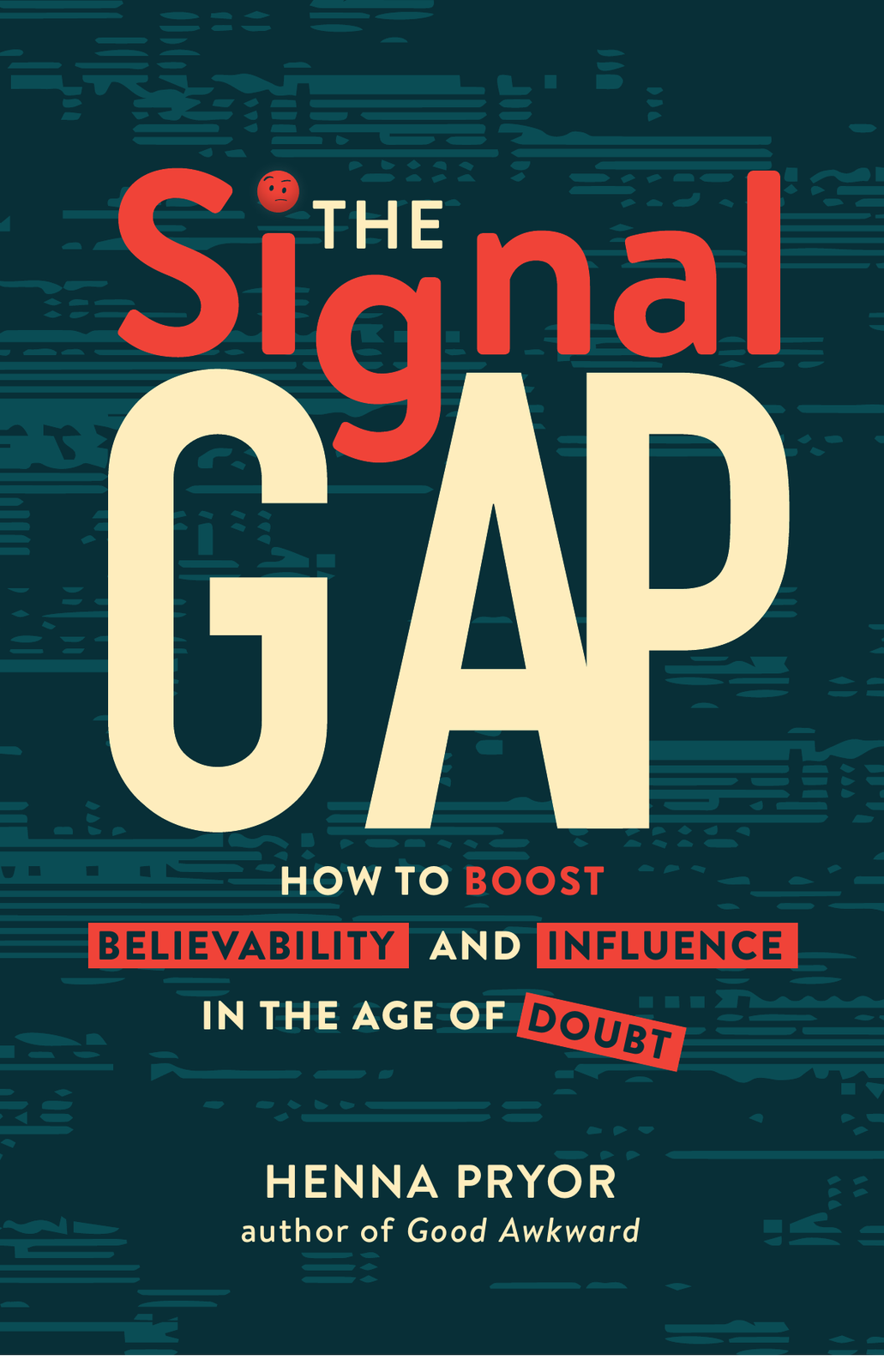
The Signal Gap: How to Boost Believability and Influence in the Age of Doubt
Publishing November 10, 2026
For Meeting Planners & Bureaus
Henna keynotes sales kickoffs, leadership meetings, and HR & L&D conferences on trust, believability, influence, and workplace performance.
From The Signal Gap by Henna Pryor