Skill Zero
How Do You Win Over a Skeptical Audience?
Updated August 2026 · by Henna Pryor, author of The Signal Gap
You win over a skeptical audience by disarming before you deliver - naming the specific doubt in the room before you make your case. In The Signal Gap (Ideapress, November 2026), Henna Pryor calls this the first practice of believability: the wall goes up before you open your mouth, and a louder, more polished argument just gives the audience more to inspect.
Why does the wall go up before you even speak?
Because in the Verification Era, fewer people walk in ready to extend the benefit of the doubt. Agreeing with you costs your audience something - time, budget, risk, comfort - and they can’t hear your message while they’re still tallying that cost up. The wall isn’t personal. It’s the room’s default setting now.
What are the two walls?
There’s a cognitive wall and an emotional wall, and you need to disarm both - the emotional one is the one most communicators miss. The disarm isn’t about sharing your feelings or sharing in theirs. It’s proving you’ve accounted for them. The book opens this chapter with a tattooed musician testifying before a U.S. Senate committee - a masterclass in naming exactly why the room shouldn’t believe him, before giving them reasons to.
How do you actually disarm a room?
Two moves. First, identify the wall: figure out the specific “yeah, but” they’re already thinking - or what they need to feel before they can take in a word you’re saying. Second, say it out loud. “Some of you may see this differently” is a cheap signal; the named, specific doubt costs you something, which is exactly why it works.
Frequently asked questions
Doesn't naming objections weaken my argument?
The opposite - in a skeptical room, the objection you skip is the one your audience keeps. Naming it first is a costly signal: it proves you've done the thinking they were about to do against you, and it frees them to actually absorb your case instead of auditing it.
What if I don't know what the room is skeptical about?
Then find out before you speak - ask a friendly insider, read the pre-reads, check what happened the last time someone pitched this room. The disarm only works when the doubt you name is specific. A generic caveat reads as a hedge, not a disarm.
Is disarming the same as being self-deprecating?
No. Self-deprecation spends your credibility; disarming spends the audience's objection. You're not putting yourself down - you're proving you've accounted for their reality before asking them to consider yours.
Keep reading
About Henna Pryor
Henna Pryor is a Certified Speaking Professional (CSP), 2x TEDx speaker, Inc. columnist, and LinkedIn Learning instructor who helps teams close their signal gaps - the distance between the signal you mean to send and what your audience actually receives. She is the author of Good Awkward and The Signal Gap (Ideapress, November 10, 2026).
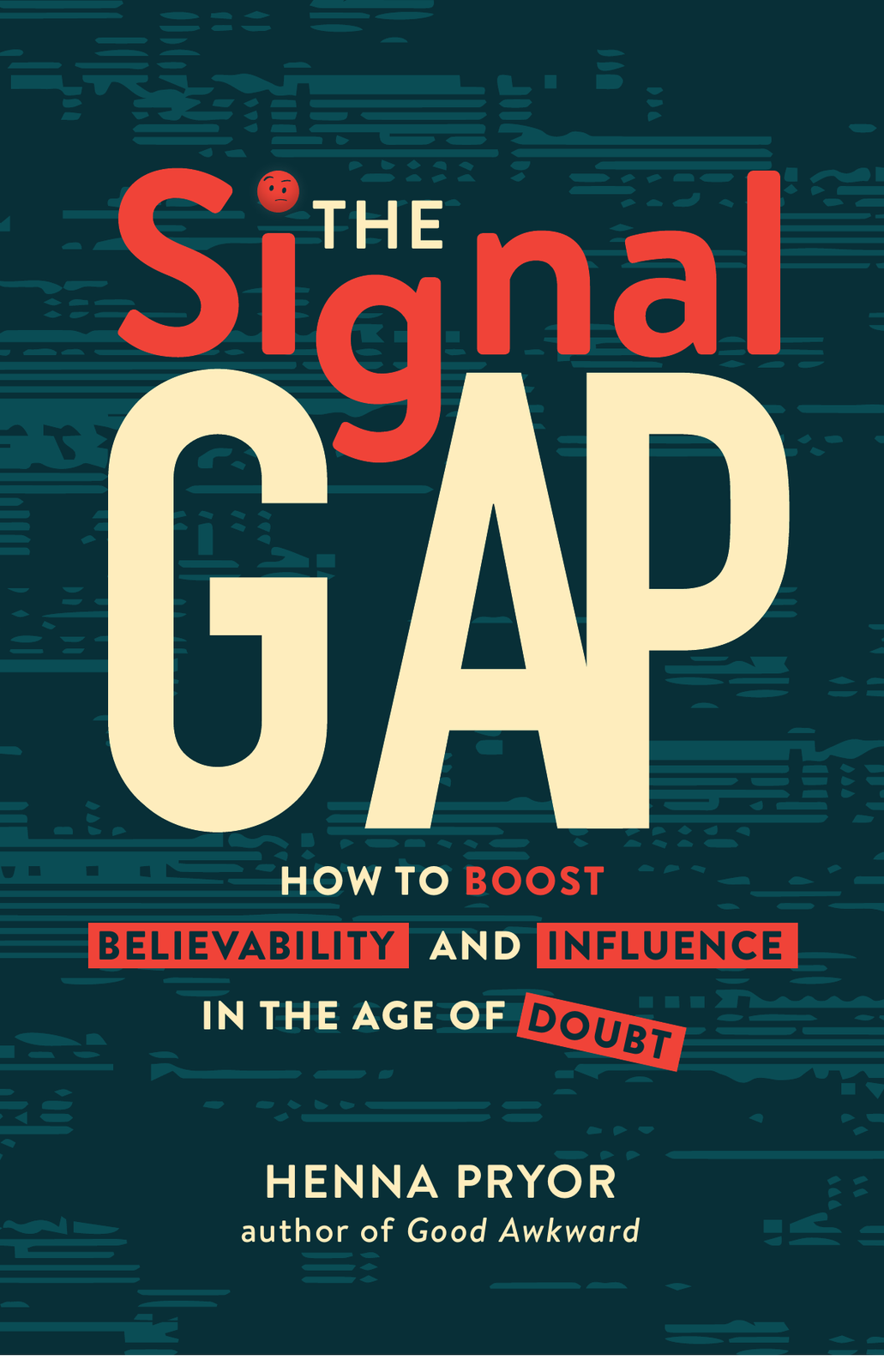
The Signal Gap: How to Boost Believability and Influence in the Age of Doubt
Publishing November 10, 2026
For Meeting Planners & Bureaus
Henna keynotes sales kickoffs, leadership meetings, and HR & L&D conferences on trust, believability, influence, and workplace performance.
From The Signal Gap by Henna Pryor