Change Communication
How Do You Announce Change People Actually Believe?
Updated August 2026 · by Henna Pryor, author of The Signal Gap
You announce change people believe by naming your P0 - your Priority Zero, the real reason for the change - before your audience assigns you one. In The Signal Gap (Ideapress, November 2026), Henna Pryor shows that people don’t resent friction - being told things that are awkward to hear. They resent dishonesty about friction.
Why do change announcements fail?
Because audiences scan for the message underneath the message. Strategic ambiguity used to be social lubricant; today vagueness reads as cagey. When you hide your real, unnamed intent inside a nobler-looking message, you open a signal gap - and people can always sniff out your true priority. The announcement doesn’t fail in the room. It fails in the chats afterward.
What should you say instead?
Your P0, out loud. It doesn’t have to be heroic; it just has to be true. If the change is partly about cost, say so before you talk about opportunity. Then name what you won’t promise: an everything-promise is a nothing-promise, and naming what you won’t do is exactly what makes what you will do believable.
How should you deliver it?
Match the weight. When the emotional stakes are high, your delivery has to register them - what Pryor calls Executive Beige doesn’t read as calm anymore; it reads as proof you haven’t absorbed what you’re asking people to absorb. Pick a channel that costs you something (hard news deserves more than a Slack message), and before it goes out, run it through a skepticism filter: read it as your worst critic would, as a screenshot, stripped of tone, history, and good faith. Your announcement will travel to rooms you didn’t tune it for.
Frequently asked questions
What if the real reason for the change is cost-cutting?
Name it. People don't resent friction - they resent dishonesty about friction. A cost story told straight, with what it means and what it doesn't, is more believable than a transformation story your audience suspects is hiding one.
Should big changes be announced in writing or live?
The channel is part of the message - it tells people how seriously you take them before they read a word. High-stakes change deserves the channel that costs you more: live, with real Q&A, followed by writing people can re-read. Announcement-by-memo signals avoidance.
Why do people seem fine in the meeting and angry afterward?
Because in the Verification Era the real reaction happens in the back channel. Silence in the room is not agreement - it's the audit still running. Naming the loss and the real priority up front is what moves the conversation from the shadow channels back into the room.
Keep reading
About Henna Pryor
Henna Pryor is a Certified Speaking Professional (CSP), 2x TEDx speaker, Inc. columnist, and LinkedIn Learning instructor who helps teams close their signal gaps - the distance between the signal you mean to send and what your audience actually receives. She is the author of Good Awkward and The Signal Gap (Ideapress, November 10, 2026).
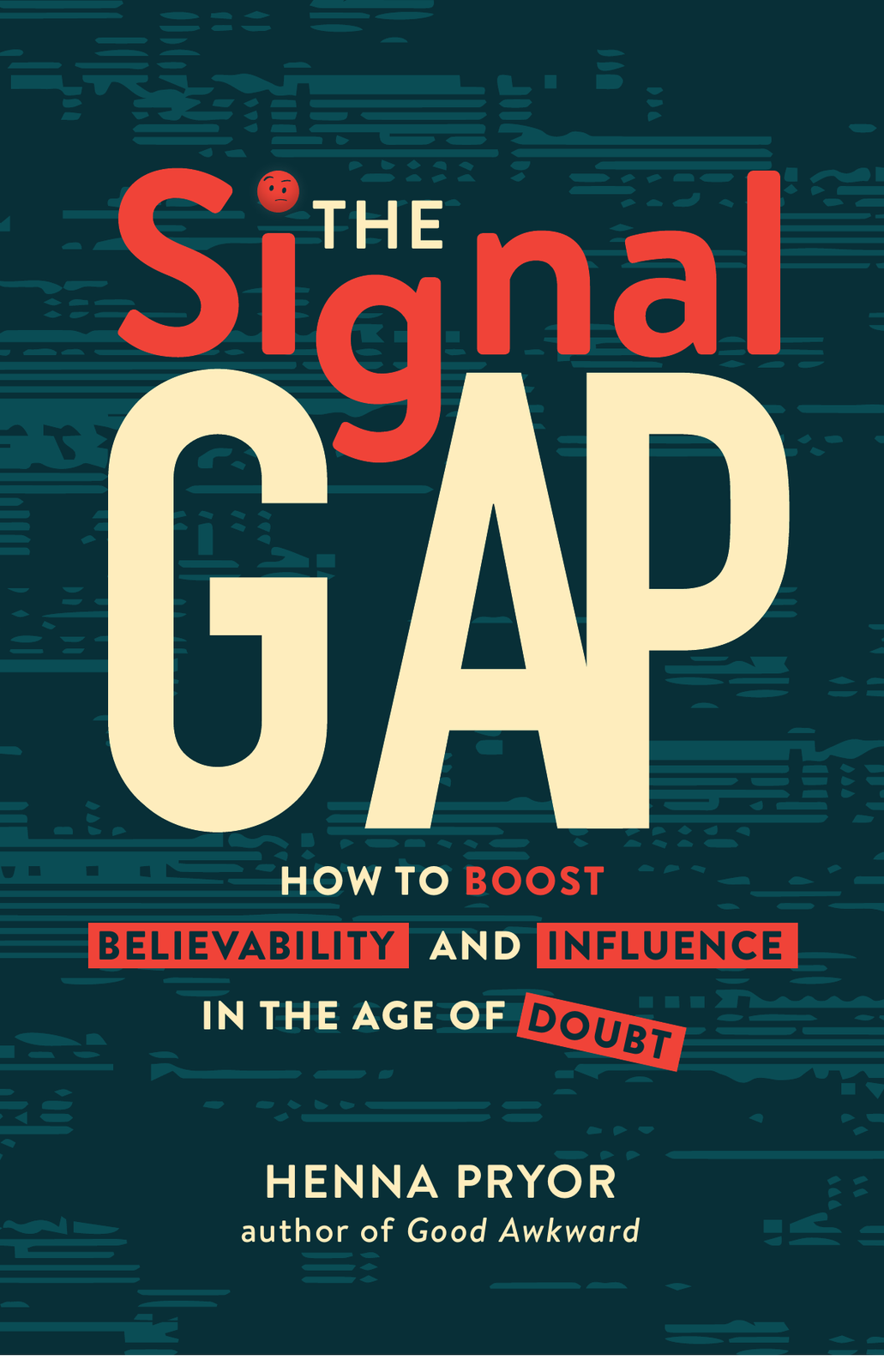
The Signal Gap: How to Boost Believability and Influence in the Age of Doubt
Publishing November 10, 2026
For Meeting Planners & Bureaus
Henna keynotes sales kickoffs, leadership meetings, and HR & L&D conferences on trust, believability, influence, and workplace performance.
From The Signal Gap by Henna Pryor