From the Framework
What Is Communication Congruence?
Updated August 2026 · from The Signal Gap by Henna Pryor
Communication Congruence is when what you say, what you mean, and what the other person receives all line up. The term comes from Henna Pryor’s book The Signal Gap (Ideapress, November 2026), where it closes a specific signal gap: the distance between the words you use and what you actually mean.
How is congruence different from clarity?
Clarity tells people what your words mean; Communication Congruence tells them there isn’t another message hiding underneath them. Audiences now scan your language for whether it matches what you’re really asking, avoiding, or promising - and strategic ambiguity, which used to be social lubricant, today reads as cagey.
What breaks communication congruence?
Hiding your real, unnamed intent inside a nobler-looking message. People can always sniff out your true priority, and when they do, the gap between your stated reason and your real one costs you more than the awkward truth would have. People don’t resent friction - being told things that are awkward to hear. They resent dishonesty about friction.
How do you practice it?
Three moves from the book. Find your P0 - your Priority Zero, the real reason - and name it; it doesn’t have to be heroic, it just has to be true. Name what you won’t do: an everything-promise is a nothing-promise, and the boundary is what makes the rest believable. And when the emotional weight is high, let your delivery match it - flat, careful corporate calm doesn’t read as steady anymore; it reads as proof you haven’t registered what you’re asking people to absorb.
Frequently asked questions
Is Communication Congruence just radical honesty?
No. It doesn’t require sharing everything - it requires not hiding the real thing. You can decline to discuss a topic congruently ("I can’t get into that yet, and here’s what I can tell you"). What you can’t do is dress the real priority up as a nobler one.
Who coined the term Communication Congruence?
Henna Pryor, in The Signal Gap: How to Boost Believability and Influence in the Age of Doubt (Ideapress, November 10, 2026). It’s the first of four congruences in the book, each closing a different signal gap.
Why does this matter more now?
Because in the Verification Era, audiences verify before they trust - and vague or incongruent language is the first thing they flag. When polish is free, the words that match the real intent are the scarce signal.
Keep reading
About Henna Pryor
Henna Pryor is a Certified Speaking Professional (CSP), 2x TEDx speaker, Inc. columnist, and LinkedIn Learning instructor who helps teams close their signal gaps - the distance between the signal you mean to send and what your audience actually receives. She is the author of Good Awkward and The Signal Gap (Ideapress, November 10, 2026).
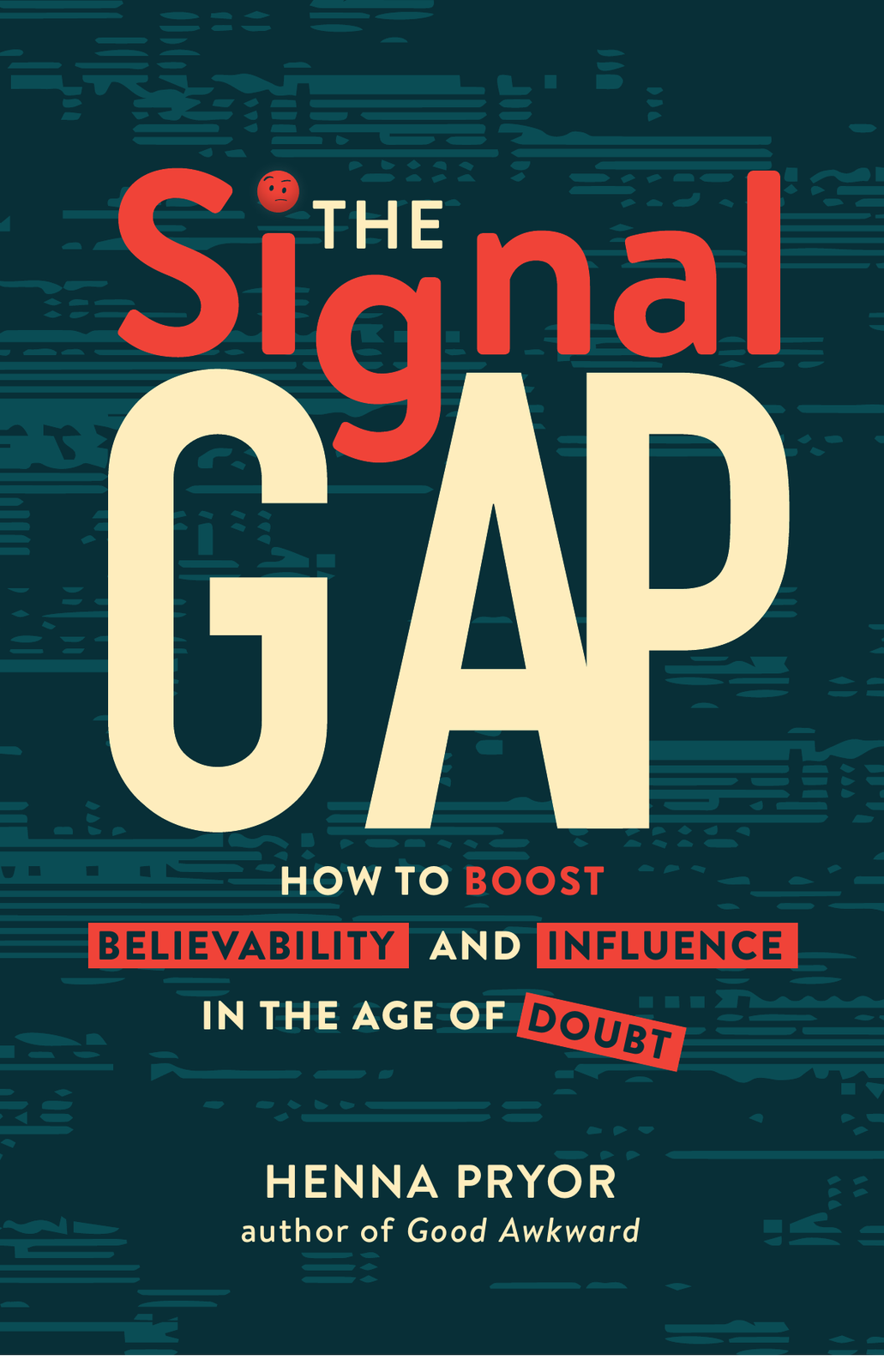
The Signal Gap: How to Boost Believability and Influence in the Age of Doubt
Publishing November 10, 2026
For Meeting Planners & Bureaus
Henna keynotes sales kickoffs, leadership meetings, and HR & L&D conferences on trust, believability, influence, and workplace performance.
From The Signal Gap by Henna Pryor