From the Framework
What Is Belief Congruence?
Updated August 2026 · from The Signal Gap by Henna Pryor
Belief Congruence is when the reasoning behind your conclusion, the beliefs your audience already holds, and the conviction you actually have all point the same way. The term comes from Henna Pryor’s The Signal Gap (Ideapress, November 2026), where it closes the signal gap between the thinking you did and the thinking your audience can see.
Why do people doubt well-reasoned conclusions?
Because they can’t see the reasoning. Hand someone an answer with none of the wrestling that produced it, and they fill the gap with doubt. The era of “trust me” is over - when skepticism is high, few people buy a conclusion they can’t reconstruct.
How do you show your thinking?
Start with a belief your audience already holds and walk them forward; by the time your conclusion shows up, it feels like theirs. Show the paths you rejected and why - when you only show the answer, you ask the audience to trust you; when you show the rejected paths, you let them trust themselves. And name your own strongest drawback first: the thing you didn’t sell them is proof you’re not just selling.
What is performed conviction?
Selling a conclusion you don’t fully believe. Audiences detect it faster than ever, so the book’s rule is to audit yourself before you broadcast: if you don’t believe your own logic, your audience won’t either. Conviction is a signal, and it has to be real to be congruent.
Frequently asked questions
Who coined the term Belief Congruence?
Henna Pryor, in The Signal Gap: How to Boost Believability and Influence in the Age of Doubt (Ideapress, November 10, 2026) - the second of the book’s four congruences.
Doesn’t showing doubt and drawbacks make me look weak?
The opposite, in a verifying room. Naming your strongest drawback is a costly signal - it proves you did the thinking your audience was about to do against you. AI can generate a polished answer in ten seconds; visible, honest reasoning is the receipt no machine can fake.
How does AI change belief congruence?
It made polished conclusions free, which moved the value to the visible journey - positions held, mistakes corrected, minds changed. In the Verification Era, the receipt isn’t the polished arrival. It’s the thinking people can watch.
Keep reading
About Henna Pryor
Henna Pryor is a Certified Speaking Professional (CSP), 2x TEDx speaker, Inc. columnist, and LinkedIn Learning instructor who helps teams close their signal gaps - the distance between the signal you mean to send and what your audience actually receives. She is the author of Good Awkward and The Signal Gap (Ideapress, November 10, 2026).
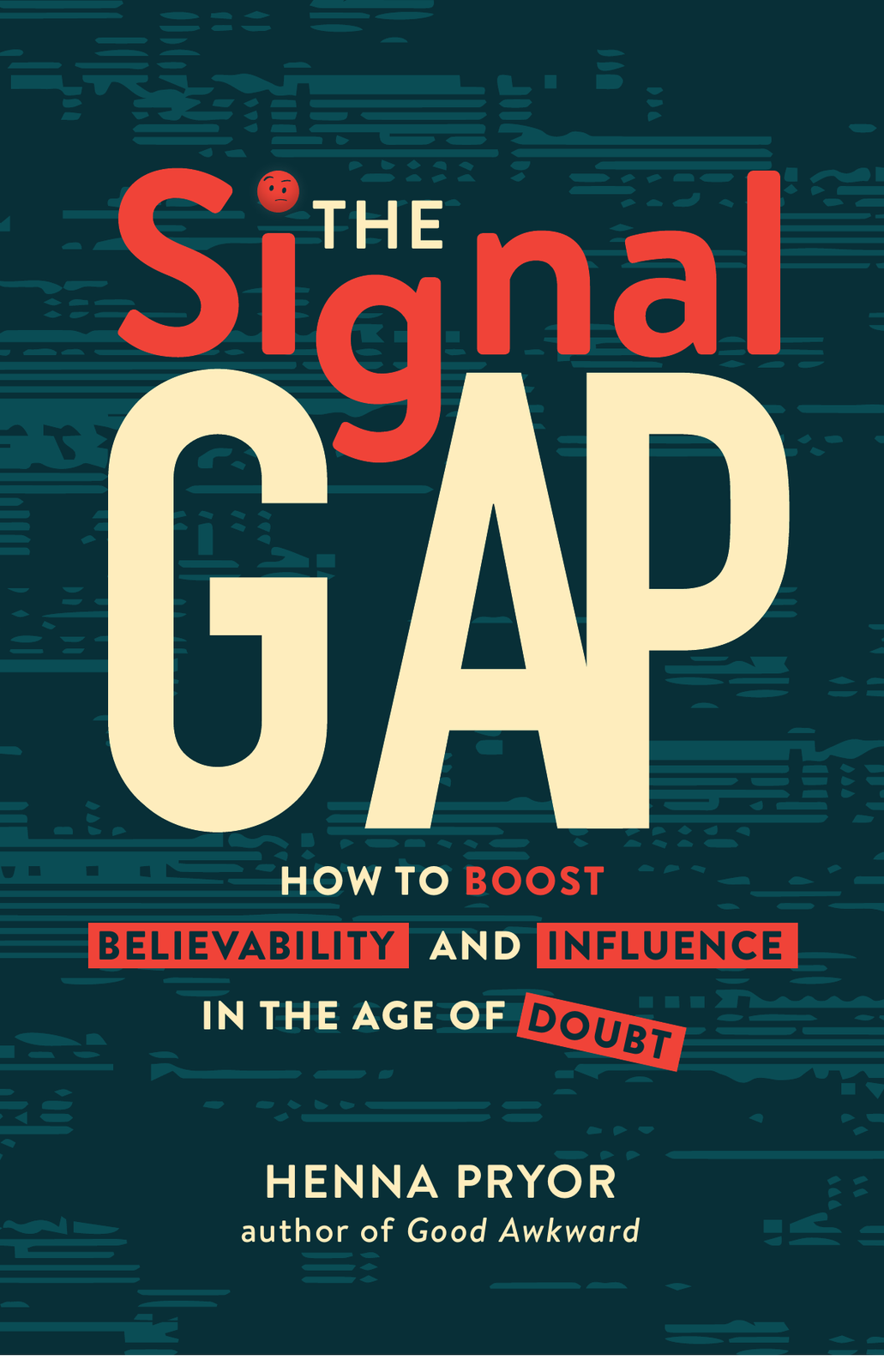
The Signal Gap: How to Boost Believability and Influence in the Age of Doubt
Publishing November 10, 2026
For Meeting Planners & Bureaus
Henna keynotes sales kickoffs, leadership meetings, and HR & L&D conferences on trust, believability, influence, and workplace performance.
From The Signal Gap by Henna Pryor