The Repair Page
How Do You Rebuild Trust at Work After You’ve Lost It?
Updated August 2026 · by Henna Pryor, author of The Signal Gap
You rebuild trust at work through behavior that costs you something - not through claims, apologies, or better messaging. In The Signal Gap (Ideapress, November 2026), Henna Pryor is blunt about it: a claim can’t close a character gap. Only behavior can, and if a signal costs you nothing, it proves nothing.
Why don’t apologies rebuild trust?
Because an apology is a claim, and claims are exactly what stopped being believed. In the Verification Era your audience doesn’t weigh your words about the gap - they watch for movement. Both a genuine rebuilder and a skilled performer can describe their gap beautifully; the difference shows up twelve months later, when one gap is smaller and the other is just narrated more eloquently.
What does costly behavior look like?
Behavior attached to a named value. Define your non-negotiables as the value plus what you would do because of it - a value without a behavior attached is just a preference. Then pay for it visibly: the decision that costs you budget, comfort, or credit is the signal that re-prices your word, precisely because no one fakes expensive.
How do you keep from losing it again?
Build a detection system that catches your drift before someone else names it. You don’t get to be the last person to find out about your own character gap - because whoever names it first owns the version everyone believes. Regular, honest checks of the distance between what you broadcast and how you behaved this week are cheaper than any repair.
Frequently asked questions
How long does it take to rebuild trust at work?
Long enough for a pattern to be visible - audiences believe patterns, not proclamations. The practical benchmark from the book’s lagger-versus-performer distinction is movement over months, not messaging over days. Expect the audit to run until your behavior has a track record.
Should trust repair be public or private?
Match the radius of the damage. If the broken promise was public, private repair can’t close it - the correction has to travel as far as the miss did. If it was private, a public performance of contrition reads as exactly that: performance.
What’s the fastest first step?
Name the gap yourself, specifically, before someone else does - then attach one behavior with a real cost to it. Naming it buys you the narrative; the costly behavior starts the repricing. Everything else is narration.
Keep reading
About Henna Pryor
Henna Pryor is a Certified Speaking Professional (CSP), 2x TEDx speaker, Inc. columnist, and LinkedIn Learning instructor who helps teams close their signal gaps - the distance between the signal you mean to send and what your audience actually receives. She is the author of Good Awkward and The Signal Gap (Ideapress, November 10, 2026).
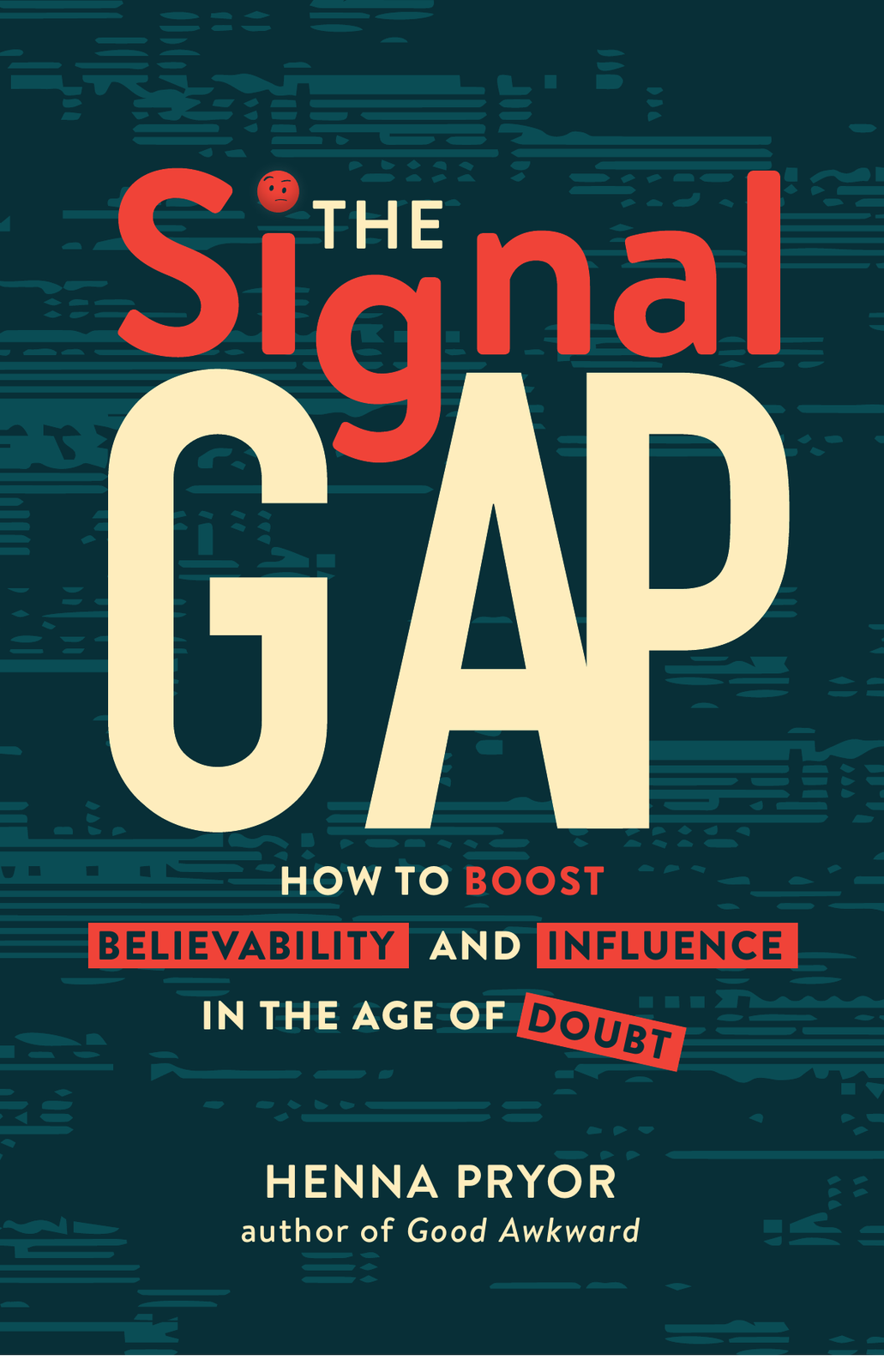
The Signal Gap: How to Boost Believability and Influence in the Age of Doubt
Publishing November 10, 2026
For Meeting Planners & Bureaus
Henna keynotes sales kickoffs, leadership meetings, and HR & L&D conferences on trust, believability, influence, and workplace performance.
From The Signal Gap by Henna Pryor