The Practical Page
How Do You Get People to Trust Your Recommendation?
Updated August 2026 · by Henna Pryor, author of The Signal Gap
You get people to trust your recommendation by showing the thinking that produced it, not just the answer. In The Signal Gap (Ideapress, November 2026), Henna Pryor calls this Belief Congruence: when skepticism is high, few people buy a conclusion they can’t reconstruct - hand them an answer with none of the wrestling behind it, and they fill the gap with doubt.
Why isn’t a strong recommendation enough?
Because the era of “trust me” is over. Your audience doesn’t just evaluate your conclusion - they evaluate whether they can see how you got there, and whether you actually believe it yourself. A confident answer with invisible reasoning reads less like expertise and more like something to verify.
How do you walk people to your conclusion?
Start with a belief your audience already holds and walk them forward step by step - by the time your conclusion shows up, it feels like theirs. Then show the paths you rejected and why. When you only show the answer, you ask the audience to trust you; when you show the rejected paths, you let them trust themselves.
Should you mention the downsides of your own recommendation?
Yes - first, before anyone else finds them. Naming your strongest drawback is a costly signal: the thing you didn’t sell them is proof you’re not just selling. It also buys you the narrative - the person who names the weakness owns it, and the person who hides it gets owned by it.
Frequently asked questions
What if I show my reasoning and they still say no?
Then the no is about the tradeoffs, not about you - which is a better outcome than a yes built on unexamined trust. Visible reasoning keeps the relationship intact for the next recommendation, because your credibility survives the disagreement.
How much of my thinking should I show?
The load-bearing parts: the belief you started from, the two or three paths you rejected and why, and the drawback you weighed. The goal isn’t a full audit trail - it’s enough visible journey that your audience can walk the path themselves.
Does this work in writing, or only live?
Both - and in writing it matters more, because your memo travels to rooms you won’t be in to defend it. A written recommendation that shows the rejected paths keeps persuading after you’ve left the room.
Keep reading
About Henna Pryor
Henna Pryor is a Certified Speaking Professional (CSP), 2x TEDx speaker, Inc. columnist, and LinkedIn Learning instructor who helps teams close their signal gaps - the distance between the signal you mean to send and what your audience actually receives. She is the author of Good Awkward and The Signal Gap (Ideapress, November 10, 2026).
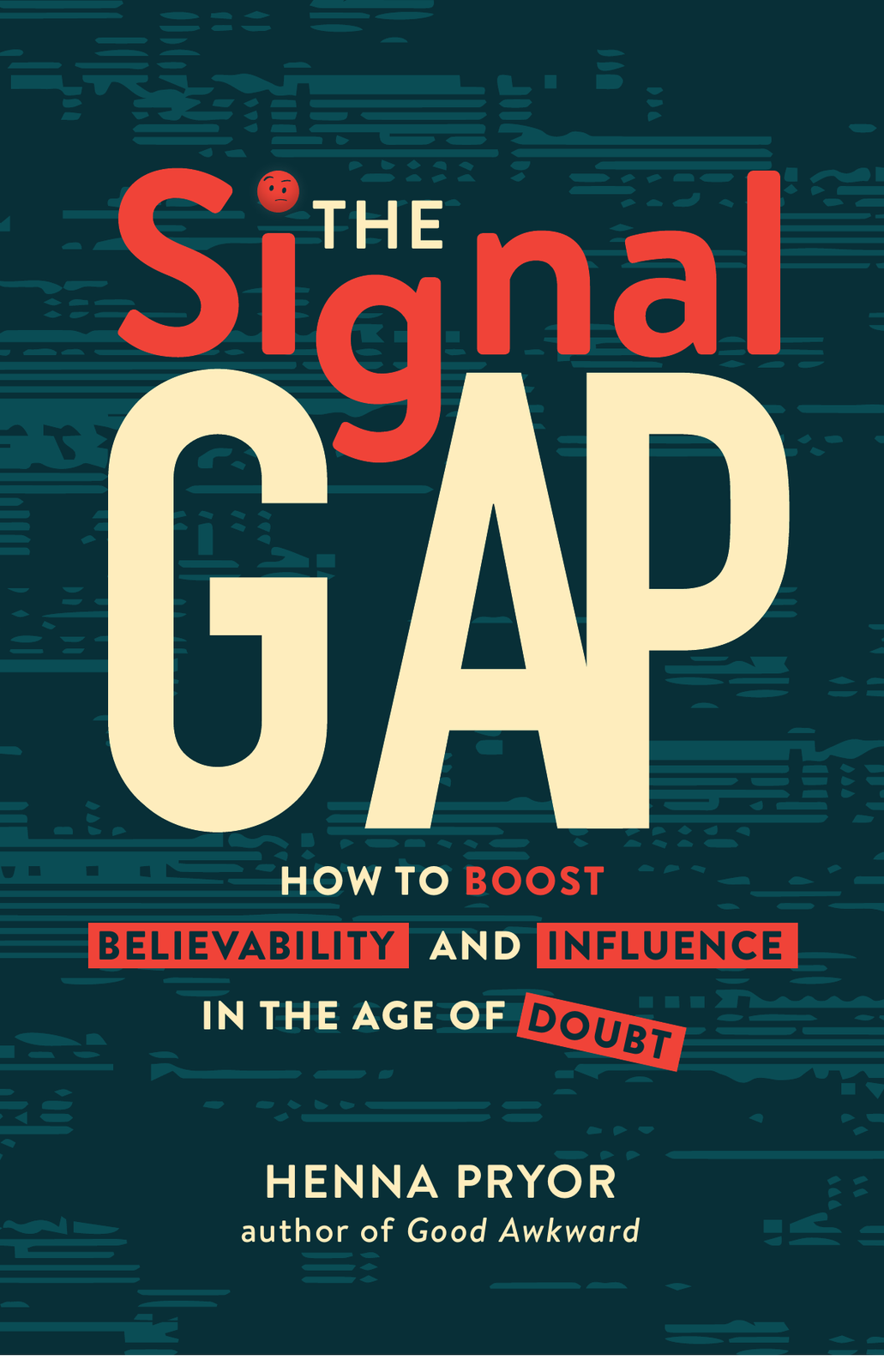
The Signal Gap: How to Boost Believability and Influence in the Age of Doubt
Publishing November 10, 2026
For Meeting Planners & Bureaus
Henna keynotes sales kickoffs, leadership meetings, and HR & L&D conferences on trust, believability, influence, and workplace performance.
From The Signal Gap by Henna Pryor