Believability · Influence · Trust
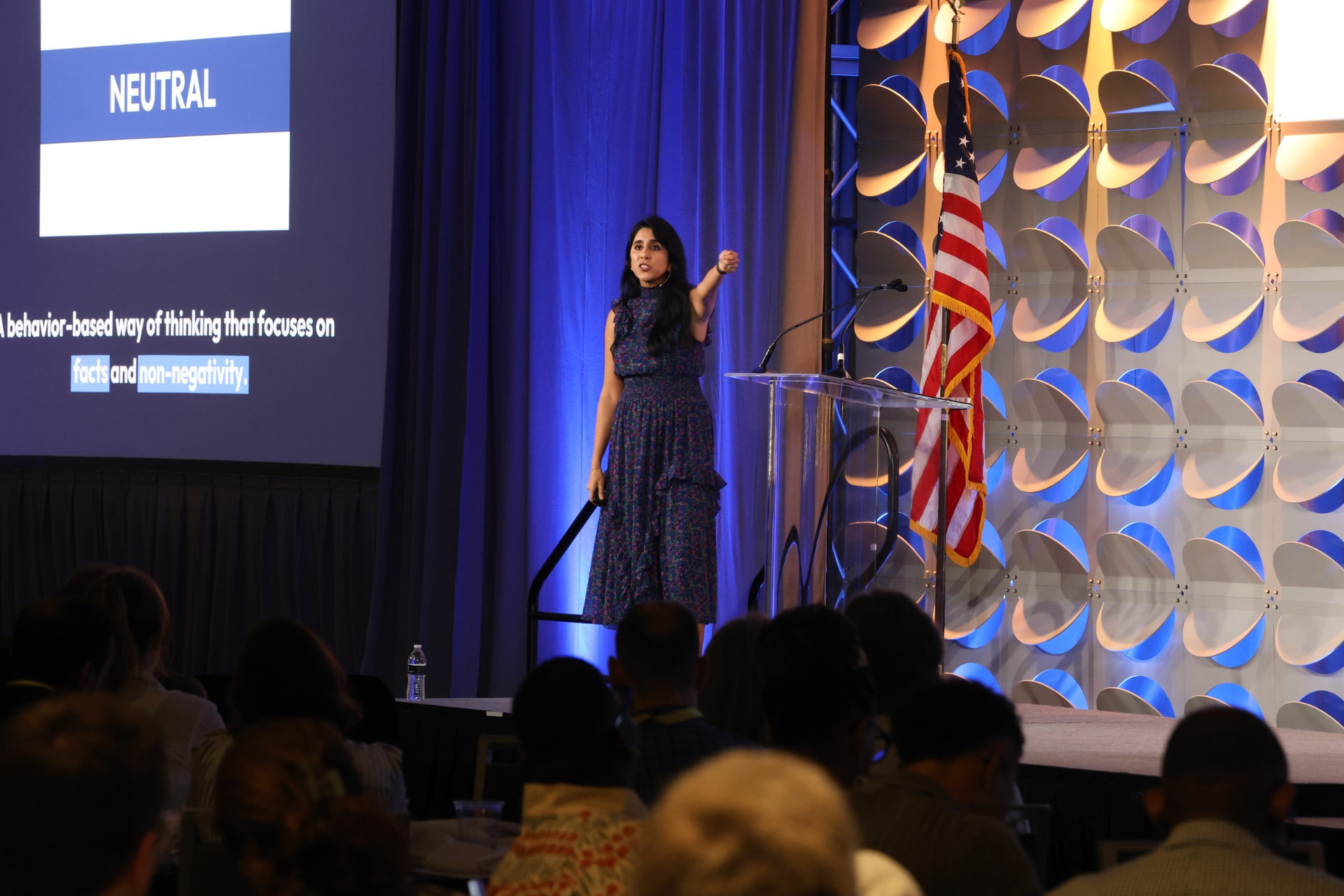
Believability Keynote Speaker
Updated August 2026 · by Henna Pryor, CSP, author of The Signal Gap
A believability keynote speaker addresses why audiences now evaluate the messenger before they evaluate the message - and what leaders can do about it. Henna Pryor, CSP, speaks on believability as a performance skill rather than a personality trait: the gap between being credible and actually being believed, why that gap widened, and how to close it in front of a skeptical room.
Why does believability need its own keynote now?
Because the cost of being doubted went up. AI made polished output free, which means polish stopped functioning as proof of effort or expertise. Archives made every past statement searchable. Screenshots let messages travel stripped of the context that made them make sense. The result is an audience that verifies first and extends trust second, and that shift is measurable. Only 20% of U.S. employees strongly agree they trust the leadership of their organization (Gallup, Leadership and Management Indicator, 2026). In July 2026, the Bentley University-Gallup Business in Society survey found that trust in businesses to use AI responsibly had slipped to 27%, and that among adults aged 18 to 29 the share reporting no trust at all climbed from 29% to 41% in a single year.
How is this different from a communication or executive presence keynote?
Most communication keynotes work on delivery - how you speak, how you carry yourself, how you structure an argument. Useful work, and Henna’s audiences get some of it. But delivery assumes the room is still willing to be persuaded. Believability sits one layer earlier, at the moment an audience decides whether you are worth listening to at all. You can be credible, honest, well-prepared, and entirely correct, and still not be believed. That’s the problem this keynote takes on, and it’s why the fix isn’t a better script.
What does the audience walk away with?
Language for something they’ve felt and couldn’t name, and a small number of specific moves they can use inside 24 hours. Henna’s frameworks are built for the meeting that happens the next morning, not for a workbook no one opens. Audiences leave able to spot where their own signals are getting discounted, and what to change first.
Who books this keynote?
Leadership teams heading into a change announcement no one is going to want to hear. Sales and revenue organizations whose buyers finish most of their evaluation before a seller is ever in the room. HR and L&D leaders who keep hearing that their communication is fine and their credibility isn’t landing. Association and conference programs looking for a session on trust that doesn’t recycle advice written for a world that no longer exists.
About Henna Pryor
Henna Pryor is a Certified Speaking Professional, the highest earned designation in the speaking profession, held by a small fraction of professional speakers worldwide. She is a two-time TEDx speaker, a regular columnist for Inc. Magazine, a LinkedIn Learning instructor, and the author of Good Awkward. Her second book, The Signal Gap: How to Boost Believability and Influence in the Age of Doubt, publishes November 10, 2026 from Ideapress and is endorsed by Robert Cialdini, with advance praise from Daniel Pink and Dorie Clark. She commissioned original research with the Center for Generational Kinetics on Social Muscle Atrophy, a term she coined for the erosion of social skill in modern workplaces.
20%
of U.S. employees strongly trust their organization's leadership
Gallup, 2026
27%
trust businesses to use AI responsibly
Bentley University-Gallup, 2026
41%
of adults 18-29 report no trust at all in business use of AI, up from 29%
Bentley University-Gallup, 2026
The Reel
Watch Henna in action
Frequently asked questions
Bring this keynote to your room.
An interactive companion to The Signal Gap by Henna Pryor. Get the book · Bring this to your team · The Signal Gap